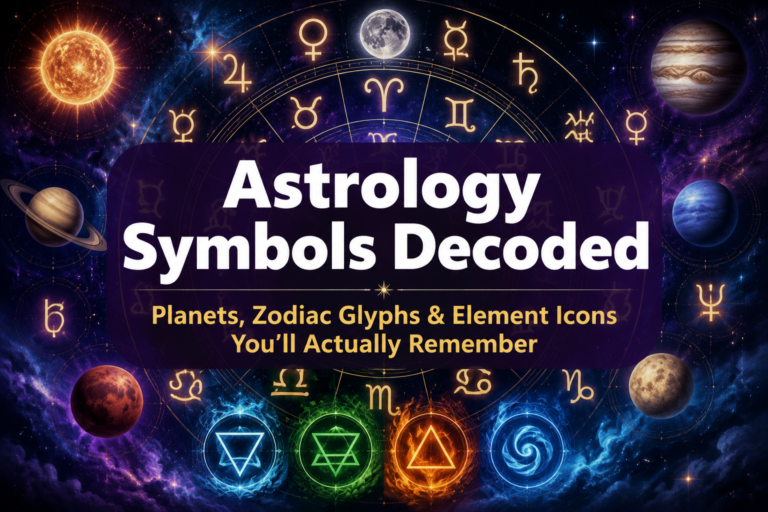
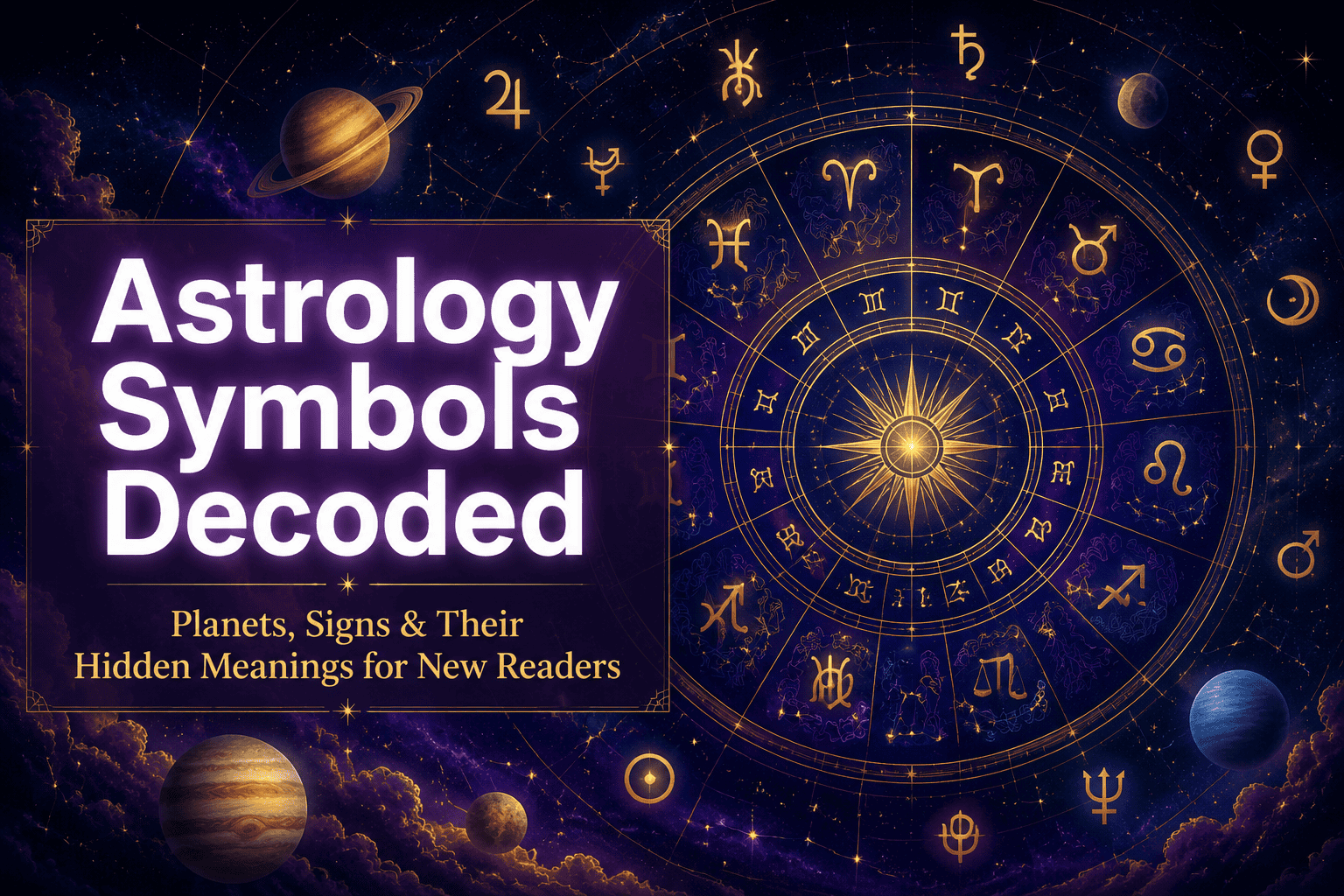
Astrology symbols (also called glyphs) are shorthand visual codes representing planets, zodiac signs, and celestial points. Each glyph carries layers of mythological, psychological, and astronomical meaning. For new readers, learning the 10 planetary glyphs and 12 zodiac symbols is the fastest way to read any birth chart independently.
- Key Takeaways
- What Do the Different Zodiac Symbols Actually Mean?
- What Do the Planet Glyphs Represent in a Birth Chart?
- How Are Planet Placements Different from Star Signs?
- Which Astrology Symbols Are Most Important for Beginners?
- How Do Rising Sign and Sun Sign Symbols Interact?
- What Do Retrograde Symbols Actually Indicate?
- Is Western or Vedic Astrology Better for Understanding Symbols?
- Are Astrology Symbols Different in Different Cultures?
- What Are the Most Common Mistakes New Astrology Readers Make?
- Can Astrology Symbols Predict Career or Relationship Compatibility?
- Where Can You Learn Astrology Symbols Online for Free?
- FAQ: Astrology Symbols Decoded for New Readers
- Conclusion: Your Next Steps with Astrology Symbols
- References
Key Takeaways
- 🪐 There are 10 core planetary glyphs used in Western astrology, each built from three basic shapes: the circle (spirit), the crescent (soul), and the cross (matter).
- ♈ Each of the 12 zodiac signs has a unique symbol rooted in mythology and natural archetypes, from Aries the Ram to Pisces the Two Fish.
- 🌟 Planet placements in a birth chart differ from sun signs — your sun sign is just one of many planetary positions.
- 🔄 Retrograde symbols (℞) do NOT mean a planet stops or reverses in space; they indicate an apparent backward motion from Earth’s perspective.
- 🌅 Your rising sign (ascendant) shapes how others see you, while your sun sign reflects your core identity.
- 🌍 Western (tropical) and Vedic (sidereal) astrology use the same glyphs but calculate sign positions differently.
- ⚷ Asteroids like Chiron and points like the North Node add depth beyond the main 10 planets.
- 💡 Most beginner mistakes involve confusing sun signs with full chart readings or misreading retrograde as “bad.”
- 💰 Professional astrology readings range from free online tools to $50–$300+ for personalized consultations.
- 📱 Free resources like Astro.com and Café Astrology let anyone generate a full chart with labeled glyphs instantly.
What Do the Different Zodiac Symbols Actually Mean?
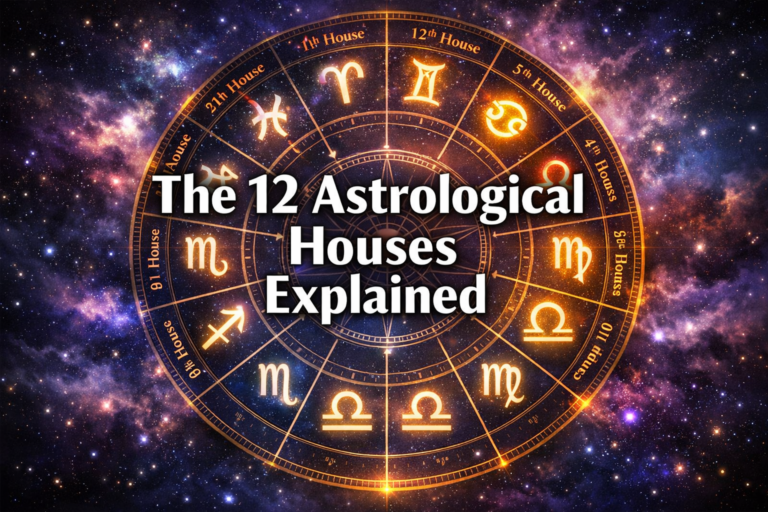
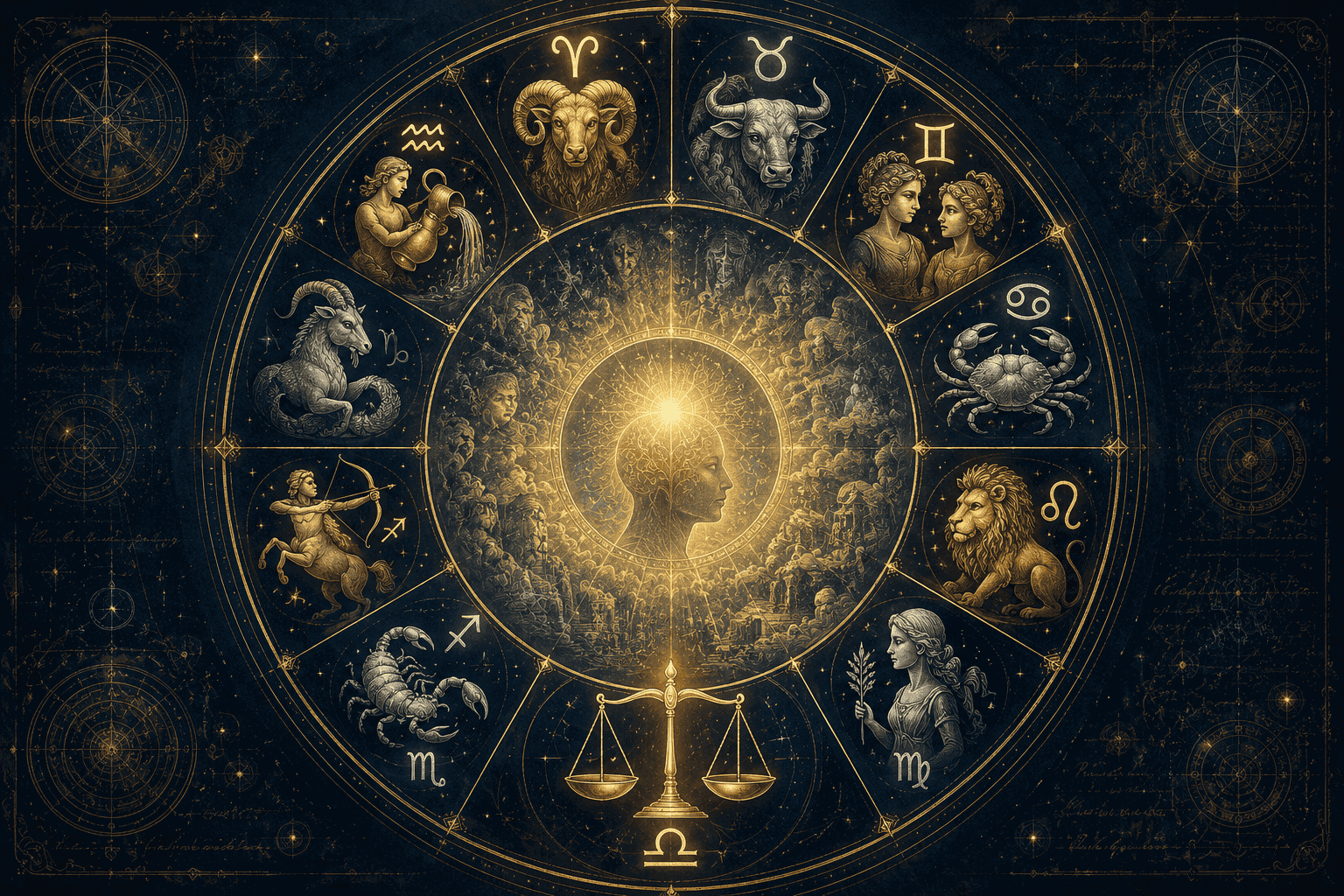
The 12 zodiac symbols are visual shorthand for archetypes that humans have recognized across cultures for thousands of years. Each glyph connects a constellation, a mythological figure, and a set of psychological traits into one compact image. [2]
Here’s a quick reference table for all 12:
| Symbol | Sign | Glyph | Core Meaning |
|---|---|---|---|
| ♈ | Aries | Ram’s horns | Initiative, courage, new beginnings |
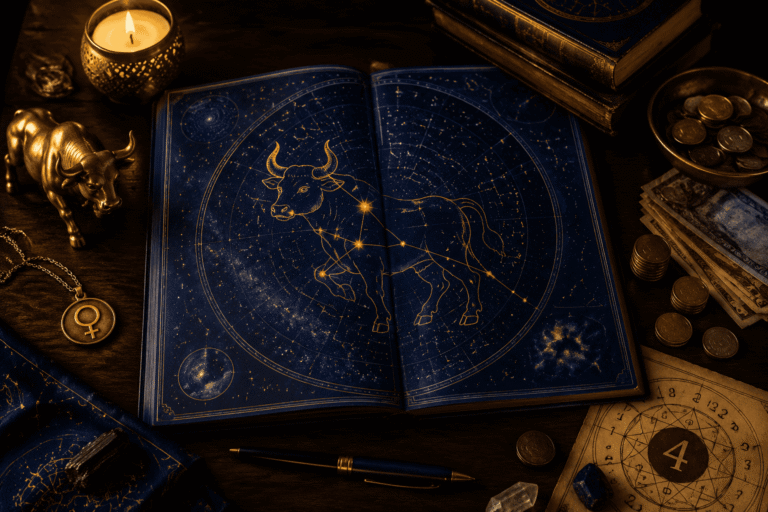
| ♉ | Taurus | Bull’s head | Stability, sensuality, persistence |
| ♊ | Gemini | Roman numeral II | Duality, communication, curiosity |
| ♋ | Cancer | Crab’s claws | Nurturing, emotion, protection |
| ♌ | Leo | Lion’s tail/mane | Creativity, leadership, self-expression |
| ♍ | Virgo | Maiden’s wheat | Analysis, service, discernment |
| ♎ | Libra | Scales of justice | Balance, fairness, relationships |
| ♏ | Scorpio | Scorpion’s stinger | Transformation, depth, power |
| ♐ | Sagittarius | Archer’s arrow | Expansion, philosophy, freedom |
| ♑ | Capricorn | Sea-goat | Ambition, discipline, legacy |
| ♒ | Aquarius | Water waves | Innovation, community, idealism |
| ♓ | Pisces | Two fish | Intuition, spirituality, compassion |
From a Jungian perspective, these archetypes aren’t random — they map onto recurring patterns in the collective unconscious. Carl Jung himself studied astrology and noted its symbolic language as a meaningful psychological tool, not a literal predictive system. The Ram doesn’t just describe a personality type; it taps into a universal human experience of charging forward into the unknown.
Common mistake: Many beginners assume the zodiac symbol is the same as the constellation it’s named after. In Western astrology, the signs are fixed 30-degree segments of the ecliptic, not the actual star clusters. [3]
What Do the Planet Glyphs Represent in a Birth Chart?
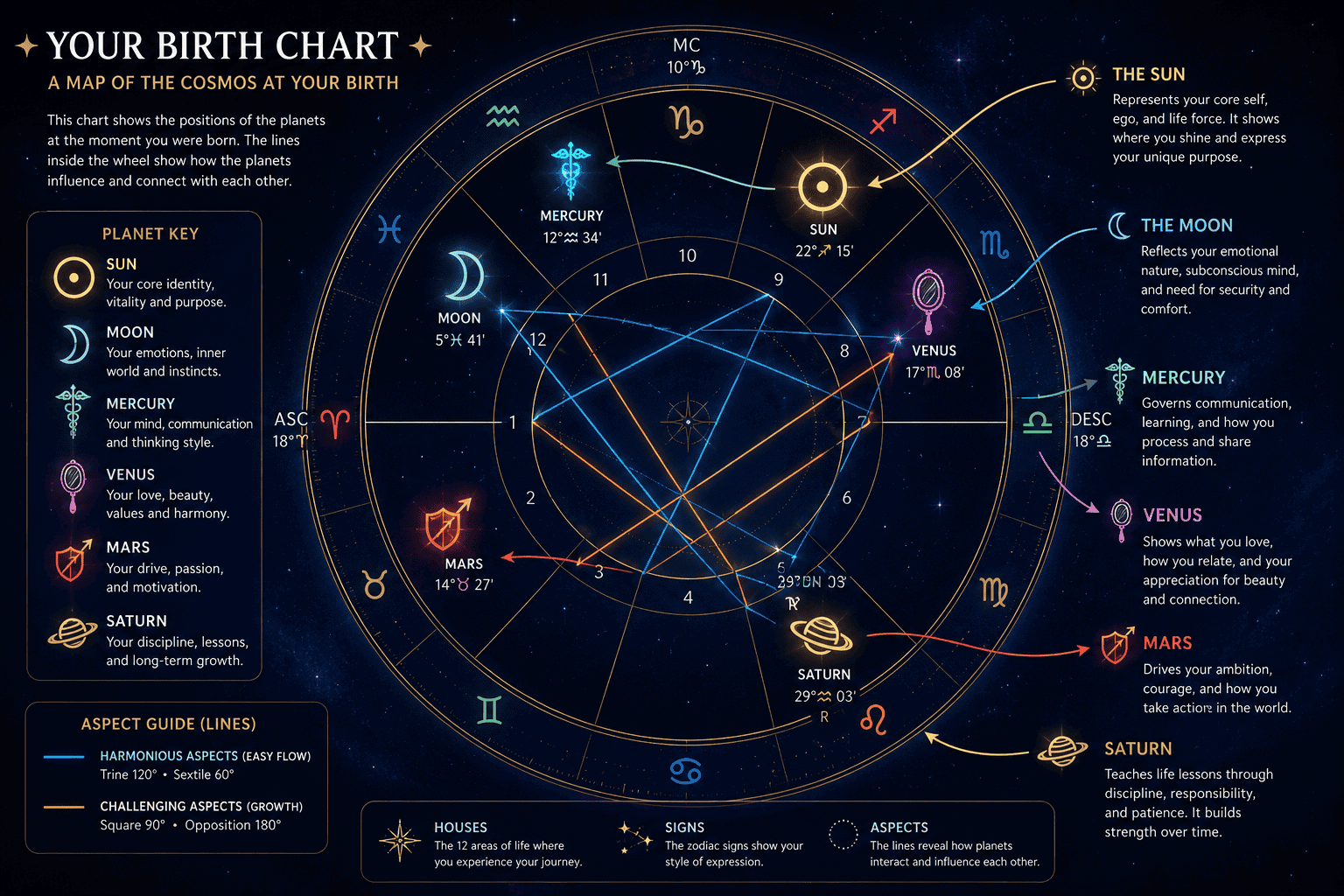
Planetary glyphs are the most important symbols to learn first. Every planet glyph is built from three core shapes: a circle (representing spirit or wholeness), a crescent (representing the soul or receptive mind), and a cross (representing matter or earthly experience). [1] Their combinations create meaning.
Here’s how the 10 main planets break down:
- ☉ Sun — Circle with a dot at center. The dot is the self; the circle is infinite potential. Represents ego, identity, and life purpose.
- ☽ Moon — A crescent shape. Pure soul, receptivity, and emotional memory. [1]
- ☿ Mercury — Crescent over circle over cross. The caduceus staff of the messenger god. Governs communication, logic, and travel. [3]
- ♀ Venus — Circle over cross (the hand mirror). Beauty, love, values, and attraction.
- ♂ Mars — Circle with an arrow pointing outward. Drive, assertion, and desire.
- ♃ Jupiter — A crescent on a cross (stylized “4”). Expansion, wisdom, and abundance.
- ♄ Saturn — Cross over a crescent (stylized “h”). Discipline, limits, and long-term structure.
- ♅ Uranus — H shape with a circle. Innovation, disruption, and sudden change.
- ♆ Neptune — Trident of Poseidon. Spirituality, illusion, and collective dreams.
- ♇ Pluto — P-L monogram or circle over crescent over cross. Transformation, power, and rebirth. [6]
Each planet also rules one or more zodiac signs, meaning it expresses most naturally through that sign’s energy. Mars rules Aries, Venus rules Taurus and Libra, Mercury rules Gemini and Virgo. [5] This rulership system is one of the oldest layers of astrological interpretation, tracing back to Hellenistic Greece.
For a deeper look at how these planetary energies play out in real life, the complete guide to planetary transits in 2026 shows how current planetary movements activate your natal chart’s symbols right now.
How Are Planet Placements Different from Star Signs?
Your star sign (sun sign) is just one planetary placement among ten or more in a full birth chart. Planet placements tell you where each planet was in the zodiac at your exact birth time and location — and that position shapes a specific area of your life.
Think of it this way:
- Sun sign = your core identity and life purpose
- Moon sign = your emotional needs and instincts
- Rising sign (Ascendant) = your outward personality and first impressions
- Mercury sign = how you think and communicate
- Venus sign = what you value and how you love
- Mars sign = how you take action and handle conflict
Most people know only their sun sign because it’s determined by birth date alone. But your moon sign and rising sign require your birth time and location to calculate accurately. This is why two people born on the same day can have very different charts.
For a thorough breakdown of how these three interact, see what your Big Three mean together: Sun, Moon, and Rising sign combinations explained.
Decision rule: If you only know your sun sign, you have about 10% of your chart’s full picture. Getting your full birth chart (free on Astro.com) gives you the remaining 90%.
Which Astrology Symbols Are Most Important for Beginners?
For new readers working through Astrology Symbols Decoded: Planets, Signs, and Their Hidden Meanings, start with these three layers in order:
Layer 1 — The Big Three glyphs (highest priority):
- ☉ Sun glyph — your core identity
- ☽ Moon glyph — your emotional core
- The Ascendant (no single glyph; marked as “AC” or “ASC”) — your outer persona
Layer 2 — Personal planet glyphs: 4. ☿ Mercury 5. ♀ Venus 6. ♂ Mars
Layer 3 — Social and outer planets (learn after the above): 7. ♃ Jupiter 8. ♄ Saturn 9. ♅ Uranus, ♆ Neptune, ♇ Pluto
Beyond planets, two additional symbols matter early on:
- ☊ North Node — your karmic direction and soul growth path [6]
- ⚷ Chiron — the “wounded healer” asteroid, pointing to deep healing potential [6]
To understand how Chiron specifically shows up in your chart, the guide on Chiron in your birth chart: healing your deepest wounds is an excellent next step.
How Do Rising Sign and Sun Sign Symbols Interact?
The rising sign and sun sign work as a duo — one is the mask, the other is the face beneath it. The sun sign symbol (☉) in your chart shows the zodiac sign where the Sun was positioned at birth. The rising sign (Ascendant) shows which zodiac sign was on the eastern horizon at that exact moment.
Here’s why this matters practically:
- Your rising sign filters how your sun sign energy gets expressed to the world.
- A Scorpio sun with a Libra rising will seem diplomatic and charming on the surface, while carrying Scorpio’s intensity underneath.
- House placements in your chart are calculated from your rising sign, so it structures the entire chart.
For example, someone with a Leo sun and Scorpio rising will have Leo’s creative confidence expressed through Scorpio’s intense, magnetic outer presence — a very different presentation than a Leo sun with Gemini rising. For more on this dynamic, see Scorpio rising traits: intense magnetism and mysterious outer persona explained.
Edge case: If you don’t know your birth time, your rising sign cannot be calculated accurately. In that case, focus on sun and moon signs until you can verify the time.
What Do Retrograde Symbols Actually Indicate?
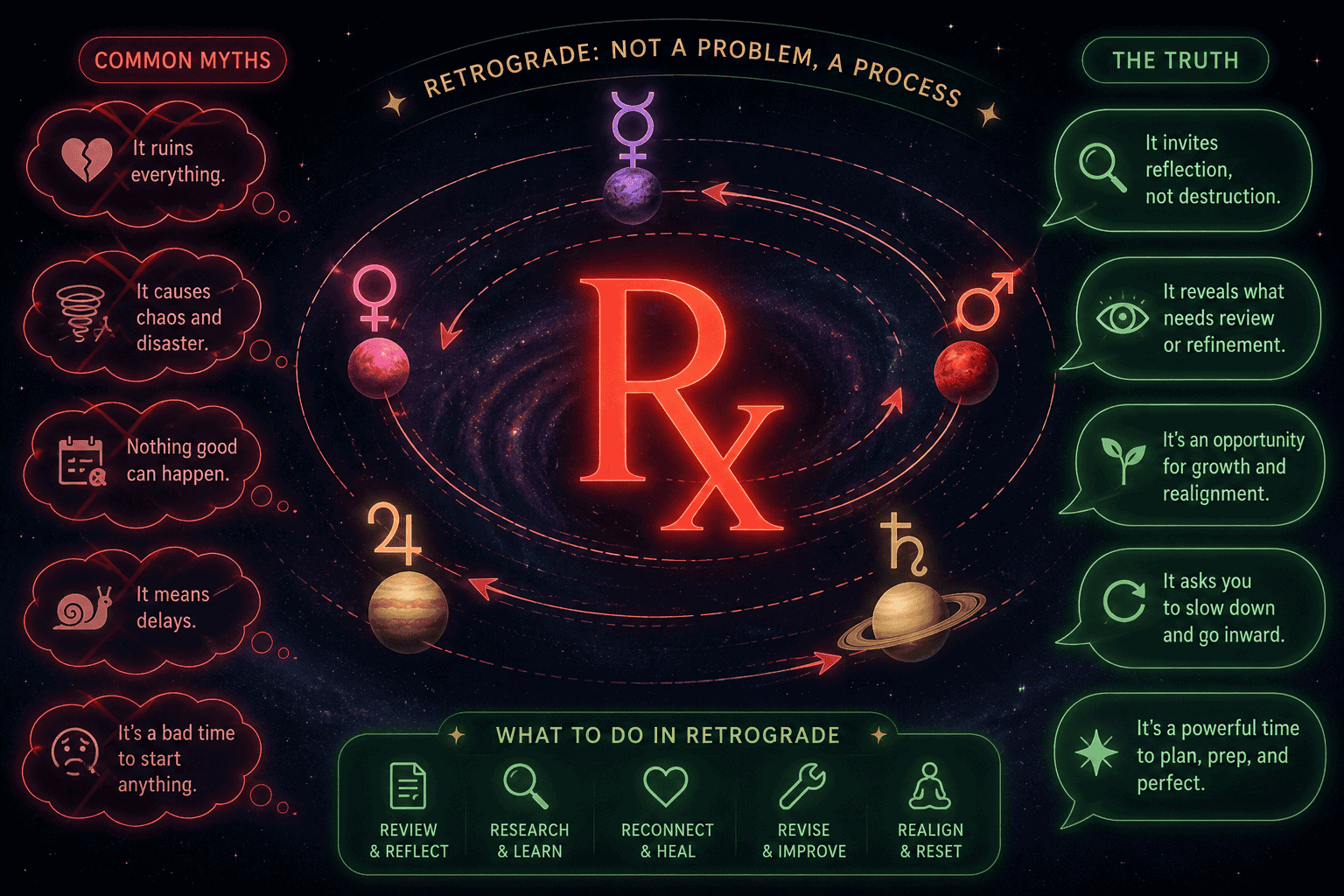
A retrograde symbol (℞ or simply “Rx”) next to a planet in a birth chart means that planet appeared to move backward from Earth’s vantage point at the time of birth. It does NOT mean the planet literally reversed direction in space.
Key facts about retrograde symbols:
- All outer planets (Jupiter through Pluto) go retrograde regularly — roughly 30–45% of the year for some planets. Having a retrograde planet in your natal chart is common, not rare.
- Mercury retrograde (the most discussed) happens about 3–4 times per year and lasts roughly 3 weeks each time.
- In a natal chart, a retrograde planet is often interpreted as energy that’s more internalized, reflective, or delayed in expression — not blocked or broken.
- Rx in transit charts (current sky) is different from Rx in a natal chart. Transit retrogrades affect everyone temporarily; natal retrogrades are personal lifelong patterns.
Common mistake: Treating every Mercury retrograde as a catastrophe. Astrologers generally recommend caution with contracts and communication during Mercury Rx, but it’s not a reason to pause all activity. For current retrograde cycles affecting communication, the Mercury retrograde in Scorpio October–November 2026 guide covers practical strategies.
Is Western or Vedic Astrology Better for Understanding Symbols?
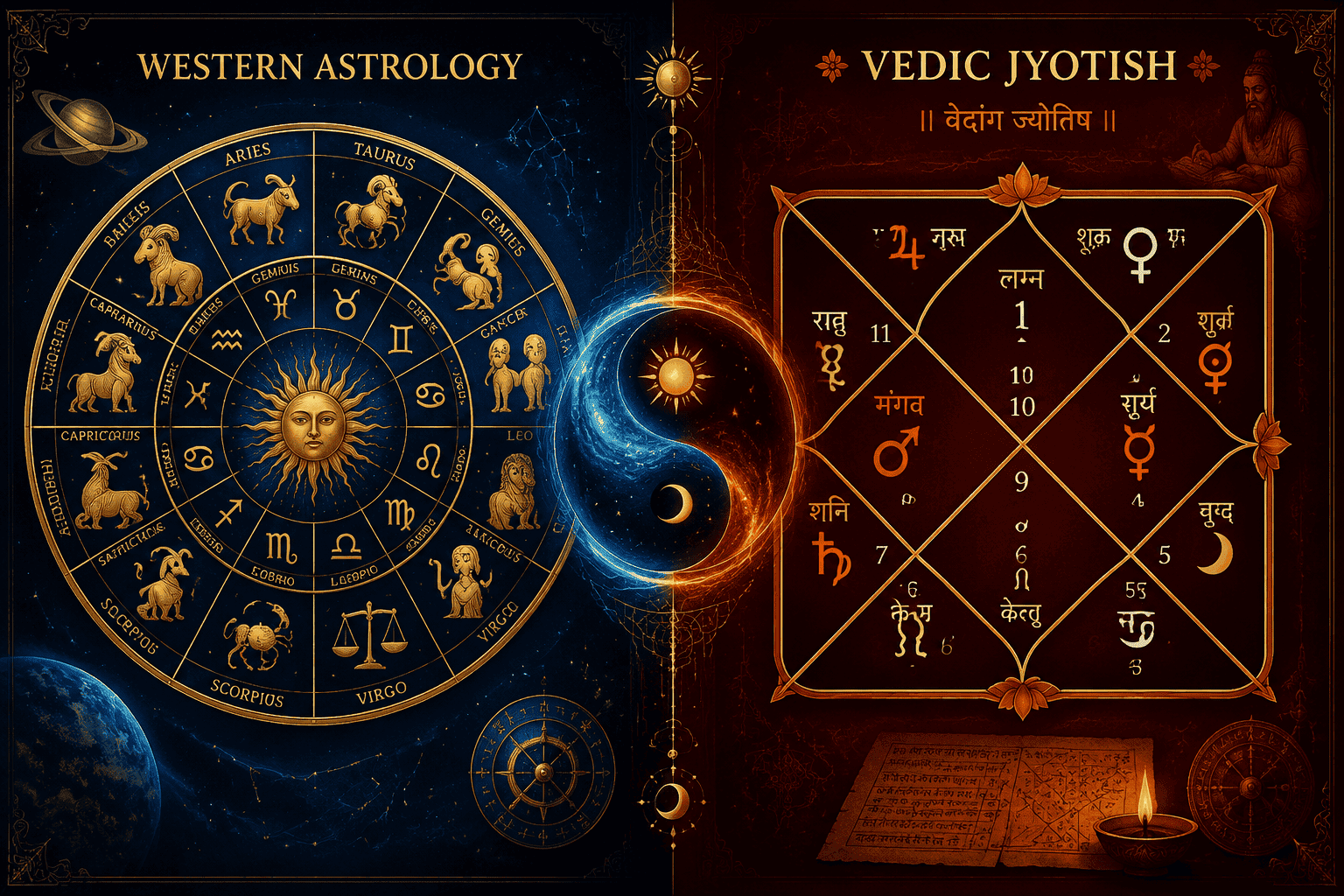
Both systems use the same planetary glyphs and zodiac symbols, but they calculate sign positions differently — so the same person can have different sun signs in each system. Neither is objectively “better”; they answer different questions.
| Feature | Western (Tropical) | Vedic (Sidereal/Jyotish) |
|---|---|---|
| Zodiac basis | Seasons (equinoxes) | Fixed star positions |
| Sun sign difference | ~23 days earlier | Shifts most people back one sign |
| Focus | Psychological character | Karma, timing, life events |
| Chart style | Round wheel | Square chart (North/South Indian) |
| Outer planets | Uranus, Neptune, Pluto included | Often excluded or secondary |
Choose Western astrology if you’re drawn to psychological self-understanding and character analysis — the Jungian framework maps naturally onto Western astrological archetypes.
Choose Vedic astrology if you want predictive timing, karmic life-path analysis, or come from a South/Southeast Asian cultural background where Jyotish is a living tradition.
For beginners specifically working through Astrology Symbols Decoded: Planets, Signs, and Their Hidden Meanings for New Readers, Western astrology is generally more accessible because of the volume of English-language resources and the psychological framing that feels intuitive to most modern readers. [3]
Are Astrology Symbols Different in Different Cultures?
The core planetary and zodiac glyphs used today are largely Greco-Roman in origin and have been standardized across Western and Vedic astrology. However, significant cultural variations exist. [3]
- Chinese astrology uses a completely different 12-animal cycle (Rat, Ox, Tiger, etc.) with no overlap with Western zodiac glyphs.
- Mayan astrology uses a 20-day sign system (the Tzolk’in) with entirely distinct symbols.
- Vedic astrology uses the same 12 zodiac signs and planetary glyphs but adds unique symbols for the lunar mansions (Nakshatras) — 27 divisions of the moon’s path with their own icons.
- Medieval European astrology developed additional symbols for fixed stars and Arabic Parts (like the Part of Fortune: ⊕) that aren’t used in all modern systems. [3]
The symbols most people encounter on apps and birth chart generators today are the standardized Western set, which NASA also documents for astronomical purposes. [1]
What Are the Most Common Mistakes New Astrology Readers Make?
New readers working through astrology symbols and birth charts tend to fall into a handful of predictable traps. Knowing them in advance saves a lot of confusion.
Top 5 beginner mistakes:
- Reading only the sun sign. Sun-sign horoscopes (the kind in magazines) apply to roughly 1/12 of the population. A full chart is far more specific and useful.
- Treating retrograde as universally negative. As covered above, retrograde planets in a natal chart are neutral — they describe a style of expression, not a flaw.
- Confusing the sign with the house. Your Venus might be in Scorpio (the sign), but it could be in your 3rd house (the life area). Both layers matter and they’re not the same thing.
- Ignoring the moon sign. For emotional patterns, relationships, and inner life, the moon sign is often more revealing than the sun sign. See moon signs vs. sun signs: unlocking your emotional core for a full comparison.
- Over-literalizing symbols. A Scorpio placement doesn’t mean someone is manipulative. Symbols are archetypes — they describe a range of potential expression, shaped by the whole chart.
Can Astrology Symbols Predict Career or Relationship Compatibility?
Astrology symbols can offer meaningful frameworks for understanding career tendencies and relationship dynamics, but they don’t predict outcomes with certainty. They describe patterns and potentials, not fixed destinies.
For career:
- The 10th house (Midheaven) and its ruling planet suggest career themes and public reputation.
- Saturn’s placement points to where discipline and long-term effort pay off.
- The sun and Mars signs often reflect how someone leads and takes initiative.
For relationships:
- Synastry (comparing two birth charts) looks at how one person’s planetary symbols interact with another’s. Venus-Mars connections are particularly noted for attraction; Saturn connections for long-term commitment.
- The 7th house and its ruler describe what someone seeks in partnerships.
For a practical guide to how these chart comparisons work, natal astrology vs. synastry: mapping personal destiny and relationship compatibility is a strong starting point.
Important caveat: Astrology symbols provide a lens for self-reflection and conversation — they work best as tools for awareness, not as decision-making authorities. Who should NOT take astrology symbols as literal predictors? Anyone making major life decisions (medical, legal, financial) based solely on astrological symbols without consulting qualified professionals in those fields.
Where Can You Learn Astrology Symbols Online for Free?
Several high-quality free resources exist for beginners in 2026:
- Astro.com — Generates free birth charts with all glyphs labeled. Includes a symbol legend and basic interpretations.
- Café Astrology (cafeastrology.com) — Detailed written guides on every planet, sign, and house symbol.
- Astrolibrary.org — Dedicated glyph reference pages with visual symbol guides. [6]
- Molly’s Astrology (mollysastrology.com) — Beginner-friendly symbol lessons with clear visual layouts. [7]
- Centre of Excellence (centreofexcellence.com) — Paid courses available, but free introductory articles on glyphs and symbols. [2]
- YouTube — Search “astrology glyphs for beginners” for visual walkthroughs of birth chart symbols.
How much does a professional astrology reading cost? Rates vary widely. Automated online readings are free to $20. A 60-minute session with an experienced professional astrologer typically runs $75–$250 in 2026, depending on the astrologer’s experience and location. Some specialists charge $300+ for comprehensive natal chart readings. Free tools are genuinely useful for learning symbols; paid readings add personalized interpretation and dialogue.
For a broader look at what astrology is and how it developed as a system, the astrology definition and meaning: from ancient divination to modern self-discovery article provides helpful historical context.
FAQ: Astrology Symbols Decoded for New Readers
Q: What is the most important symbol in a birth chart? The Sun glyph (☉) is typically the starting point because it represents core identity and life purpose. However, for emotional patterns, the Moon glyph (☽) is equally significant.
Q: What does the ☊ symbol mean in my chart? ☊ is the North Node, representing your karmic direction — the qualities and experiences your soul is moving toward in this lifetime. Its opposite, ☋ (South Node), shows ingrained past patterns. [6]
Q: Can two people have the same birth chart? Only if they were born at the exact same time, date, and location. Even a few minutes’ difference changes the rising sign and house placements, making truly identical charts extremely rare.
Q: What does it mean if I have many planets in one sign? This is called a stellium. It concentrates that sign’s energy strongly in your personality. Three or more planets in the same sign creates a notable emphasis on that sign’s themes.
Q: Is the zodiac symbol the same as the constellation? No. In Western astrology, zodiac signs are 30-degree mathematical divisions of the ecliptic. The actual constellations vary in size and no longer align with the tropical zodiac signs due to precession of the equinoxes. [3]
Q: What does the ⚷ symbol mean? ⚷ is Chiron, a minor planet (centaur body) associated with the “wounded healer” archetype. Its placement in your chart shows where you’ve experienced deep wounds and where you have the potential to become a healer or teacher for others. [6]
Q: Do I need to know my exact birth time to use astrology symbols? You need an exact birth time for your rising sign, house placements, and precise Moon sign (if born near a sign change). Sun sign, Mercury, Venus, Mars, and outer planet signs can be determined from birth date alone in most cases.
Q: Are astrology symbols scientifically validated? No peer-reviewed scientific consensus supports astrology as a predictive science. Astrology functions best as a symbolic and psychological language — a structured framework for self-reflection, not an empirical science. [3]
Q: What’s the difference between a glyph and a symbol in astrology? They’re used interchangeably. “Glyph” typically refers to the specific visual character (like ♄ for Saturn), while “symbol” can refer more broadly to the sign, planet, or concept it represents.
Q: What does the ⊕ symbol mean? ⊕ is the Part of Fortune (also called Lot of Fortune), an Arabic Part calculated from the positions of the Sun, Moon, and Ascendant. It points to areas of natural luck and fulfillment in a chart. [6]
Q: How long does it take to learn all the astrology symbols? Most beginners can memorize the 10 planetary glyphs and 12 zodiac symbols within 2–4 weeks of regular practice. Full chart interpretation takes months to years of study.
Q: Where can I see all astrology symbols in one place? Astrolibrary.org’s glyphs page [6] and Molly’s Astrology [7] both offer comprehensive single-page symbol references with visual guides.
Conclusion: Your Next Steps with Astrology Symbols
Understanding Astrology Symbols Decoded: Planets, Signs, and Their Hidden Meanings for New Readers doesn’t require years of study to get started. The symbols are a visual language — and like any language, fluency comes from regular, low-pressure exposure.
Actionable next steps:
- Generate your free birth chart at Astro.com today. Download or screenshot it and keep it handy as a reference.
- Learn the Big Three first: Find your Sun (☉), Moon (☽), and Rising sign (ASC) in your chart before anything else.
- Use a glyph reference sheet from Astrolibrary.org [6] or Molly’s Astrology [7] while reading your chart until the symbols become second nature.
- Read one planet at a time. Spend a week with Venus, then a week with Mars. Depth beats breadth for retention.
- Cross-reference with current transits. Seeing how a planet’s glyph in your natal chart connects to what’s happening in the sky right now makes the symbols come alive. The complete guide to planetary transits in 2026 is a practical companion for this.
- Explore beyond sun signs. Once you know your Big Three, dive into beyond sun signs: Moon and Venus compatibility to see how the symbols interact in relationships.
The symbols aren’t magic codes that determine fate. They’re a structured vocabulary for understanding patterns — in personality, timing, and relationships. The more fluently you read them, the more useful they become as a tool for self-awareness.
References
[1] Solar System Symbols – https://science.nasa.gov/resource/solar-system-symbols/?utm_source=openai
[2] Symbols And Glyphs In Astrology – https://www.centreofexcellence.com/symbols-and-glyphs-in-astrology/?utm_source=openai
[3] Astrological Symbols – https://en.wikipedia.org/wiki/Astrological_symbols?utm_source=openai
[4] Astrology Symbols – https://www.getastromood.com/library/astrology-symbols?utm_source=openai
[5] Planets – https://www.astrochartus.com/astrology/planets?utm_source=openai
[6] Glyphs – https://astrolibrary.org/glyphs/?utm_source=openai
[7] Astrology Symbols – https://www.mollysastrology.com/lesson/astrology-symbols/?utm_source=openai