
The year 2026 is one of the most astrologically dense years in recent memory, featuring a rare Saturn-Neptune conjunction at 0° Aries, a seven-year Uranus in Gemini cycle, Jupiter’s exaltation in Cancer, a nodal axis shift into Aquarius/Leo, and multiple powerful eclipses. Each of these transits creates a distinct “chapter” of collective energy, reshaping how individuals approach identity, community, creativity, and material security. This complete guide to planetary transits in 2026 maps out every major shift so readers can plan launches, rituals, moves, and personal milestones with intention.
- Key Takeaways 🌟
- What Makes 2026 Astrologically Significant?
- How Do the Early 2026 Transits Set the Year's Foundation?
- What Does Uranus in Gemini Mean for the Collective?
- How Does Jupiter in Cancer Reset Emotional and Financial Energy?
- What Happens When the North Node Shifts to Aquarius in July?
- How Should Readers Plan Around the September Retrograde Cluster?
- What Do the Final Months of 2026 Bring?
- FAQ: Planetary Transits in 2026
- Conclusion: How to Use This Complete Guide to Planetary Transits in 2026
- References
Key Takeaways 🌟
- Saturn conjunct Neptune at 0° Aries (February 20) is the signature transit of 2026, dissolving old structures and inviting new spiritual-practical frameworks [1]
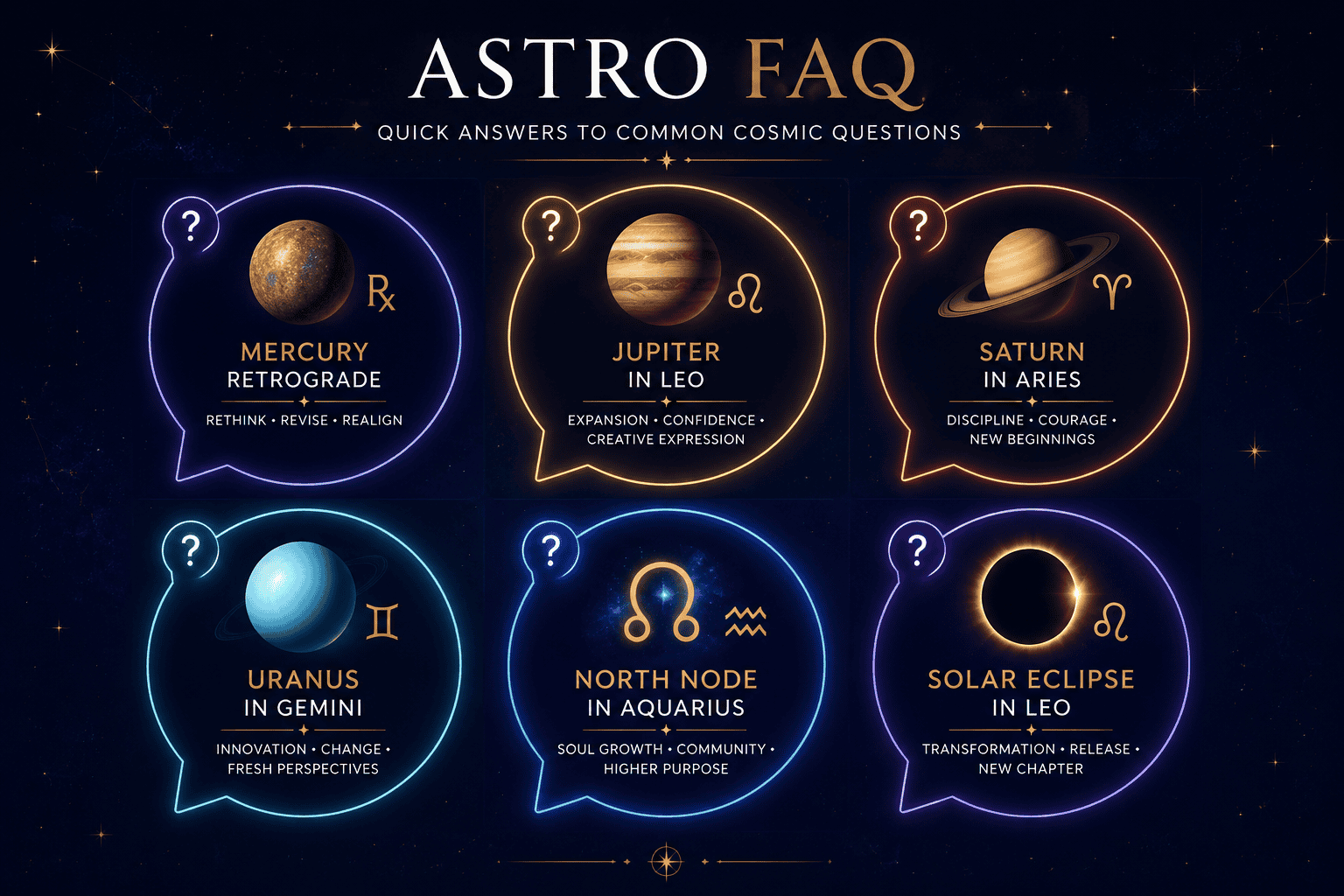
- Uranus enters Gemini (April 25) for a seven-year cycle, revolutionizing communication, technology, and how communities form [1]
- Jupiter enters Cancer (June 2) in its exaltation, bringing a “Hamsa Yoga” energy of emotional abundance and family blessings [2]
- North Node shifts to Aquarius (July 26) for nearly two years, redirecting collective destiny from individual glory to shared innovation [1]
- The Leo Solar Eclipse (September 12) amplifies creative self-expression and leadership themes right as Jupiter moves into Leo [7]
- September 2026 features four outer planets retrograde simultaneously, creating a powerful window for internal reassessment [3]
- Jupiter enters Leo (October 31) and stations retrograde in December, asking everyone to internalize lessons of personal power [2]
- Mercury Retrograde in Sagittarius (November 23 – December 15) closes the year with reflection on beliefs and communication [7]
- Every major transit creates an energetic “chapter” — knowing the dates helps readers time decisions, launches, and rituals effectively
- Both Western and Vedic astrology agree: 2026 is a year of structural dissolution, collective evolution, and emotional rebuilding
What Makes 2026 Astrologically Significant?
2026 stands apart because multiple slow-moving, generational planets change signs or form rare alignments within months of each other. This stacking of major transits means collective energy shifts more frequently and more dramatically than in most years.
In most years, one or two outer planets make significant moves. In 2026, at least five major astrological events of generational weight occur before summer even ends. For anyone using astrology to plan their year, this creates both opportunity and challenge: the windows for specific types of energy are shorter, but they’re also more potent.
Here’s a bird’s-eye view of the year’s major chapters:
| Month | Key Transit | Collective Theme |
|---|---|---|
| February | Saturn conjunct Neptune at 0° Aries; Aquarius Solar Eclipse | Dissolution, reset, new beginnings |
| March | Saturn enters Aries; Lunar Eclipse in Virgo | Discipline, health, structure |
| April | Uranus enters Gemini; Aries Stellium | Communication revolution, bold action |
| June | Jupiter enters Cancer | Emotional abundance, family, home |
| July | North Node shifts to Aquarius | Collective purpose, innovation |
| September | Four planets retrograde; Leo Solar Eclipse | Reassessment, creative expression |
| October–November | Jupiter enters Leo; Nodal axis shifts (Vedic) | Leadership, creativity, karmic redirection |
| December | Jupiter retrograde; Mercury retrograde | Internalization, reflection |
How Do the Early 2026 Transits Set the Year’s Foundation?
The first quarter of 2026 establishes the energetic blueprint for everything that follows. Three events in particular act as the year’s foundation stones.
The Aquarius Solar Eclipse (February 17) opens a doorway into collective innovation. Aligned with the North Node in Aquarius, this eclipse signals that the collective is being called toward future-thinking, progressive community building, and liberation from outdated social patterns [1]. For individuals, this is an ideal moment to set intentions around group belonging, technology, and humanitarian goals.
Saturn conjunct Neptune at 0° Aries (February 20) is the most discussed transit of the year across both Western and Vedic astrology communities. This rare alignment — sometimes called the “cosmic reset” of 2026 — fuses Saturn’s demand for structure with Neptune’s capacity for dissolution [1]. The result is a collective invitation to release systems that no longer serve and begin building new ones with both spiritual vision and practical grounding. The Saturn-Neptune conjunction in Aries is particularly significant for natal first-house placements, as it directly activates identity and self-concept.
Saturn enters Aries (March 2026) follows shortly after, beginning a multi-year cycle of building discipline around individual identity, courage, and self-assertion. The March 3 Lunar Eclipse in Virgo adds a layer of health-focused release, encouraging the collective to shed perfectionism and overhaul daily routines.
Planning tip: The February-March window is best used for releasing old commitments, setting new structural goals, and beginning health or wellness routines. Avoid launching major new projects until after the eclipse energy settles in mid-March.
What Does Uranus in Gemini Mean for the Collective?
Uranus entering Gemini on April 25, 2026, begins a seven-year cycle (running through August 3, 2032) that will fundamentally change how humanity communicates, learns, and forms communities [1].
Uranus is the planet of sudden breakthroughs and disruption. Gemini governs communication, information networks, local communities, and the way minds connect. When these two forces combine, the result is rapid, often unexpected evolution in:
- Technology and communication platforms (think: new forms of social media, AI-driven conversation, decentralized information networks)
- Education systems (non-traditional learning, peer-to-peer knowledge sharing)
- Mental health awareness (collective awakening to how information affects the mind)
- Neighborhood and community formation (hyper-local networks gaining power)
For a deeper look at how this transit affects each zodiac sign, the Uranus in Gemini April 2026 guide breaks down house-by-house impacts.
Common mistake: Many people assume Uranus transits bring only chaos. In reality, Uranus dissolves what’s stagnant and replaces it with something more aligned with collective evolution. The disruption is purposeful.
Also notable in April: the Aries Stellium (April 13–19) stacks multiple planets in Aries, supercharging bold action, competitive energy, and new beginnings. This is one of the best windows of the year for launching personal projects, starting businesses, or initiating important conversations.

How Does Jupiter in Cancer Reset Emotional and Financial Energy?
Jupiter enters Cancer on June 2, 2026, reaching its exaltation — the sign where it functions at maximum strength. In Vedic astrology, this placement creates “Hamsa Yoga,” a configuration associated with wisdom, prosperity, and moral clarity [2].
For the collective, Jupiter in Cancer (June 2 – October 31, 2026) shifts the growth focus from intellectual expansion to emotional intelligence and home-based security. Key themes include:
- Family healing and ancestral work becoming more culturally valued
- Real estate and home investment gaining favorable momentum
- Emotional wellness moving to the center of personal development conversations
- Nurturing leadership styles gaining more recognition over aggressive or purely transactional approaches
For signs most affected by this transit, the Jupiter in Cancer June 2026 guide outlines specific prosperity shifts by house. Meanwhile, the 5 zodiac signs entering a wealth and abundance era in 2026 explores how the Saturn-Neptune conjunction and Jupiter’s exaltation combine to create financial reset opportunities.
Choose Jupiter in Cancer if: you’re planning to buy property, start a family-related business, deepen therapy or emotional healing work, or invest in home-based income streams. This transit strongly supports all of these.
What Happens When the North Node Shifts to Aquarius in July?
The North Node moves into Aquarius (and South Node into Leo) on July 26, 2026, beginning an approximately 18-month cycle through March 26, 2028 [1]. This is one of the most collectively significant shifts of the year.
The nodal axis acts as a compass for collective evolution. With the North Node in Aquarius, the collective is being called to move away from:
- Individual performance and personal glory (South Node in Leo)
- Waiting for a singular leader to solve problems
- Hierarchical, top-down systems
And toward:
- Community-led innovation and shared intelligence
- Collective problem-solving and peer networks
- Technology as a tool for human connection, not just efficiency
- Humanitarian values over personal brand-building
This shift pairs powerfully with Uranus already in Gemini, creating a double emphasis on collective communication and community intelligence. For Aquarius placements specifically, the North Node in Aquarius July 2026 guide explains how fixed signs experience this pressure most intensely.
“The question shifts from ‘How do I shine?’ to ‘How do we evolve?'” — a core theme of the North Node in Aquarius cycle [1]
How Should Readers Plan Around the September Retrograde Cluster?
September 2026 is the year’s most internally focused month. Multiple outer planets are retrograde simultaneously — Saturn, Uranus, Neptune, and Pluto — creating a rare window of collective reassessment [3].
This doesn’t mean everything stops. It means the energy turns inward. Here’s how to use this period well:
What to do in September 2026:
- Review decisions made during the bold Aries Stellium in April
- Reassess relationships, projects, or commitments that began around the Jupiter in Cancer window
- Journal, meditate, or engage in shadow work — the retrograde cluster supports deep inner processing
- Hold off on major launches, contracts, or irreversible decisions where possible
What’s still active: The Leo Solar Eclipse on September 12 brings a burst of creative and leadership energy even within the retrograde backdrop. Eclipses override retrograde caution in many ways — this one specifically activates career destiny and public visibility [7].
Edge case: If a major life event (job offer, relationship milestone, health decision) lands in September, don’t let retrograde fear paralyze action. Retrograde energy asks for reflection, not paralysis. Make decisions with extra care and review, but don’t avoid them entirely.
What Do the Final Months of 2026 Bring?
The last quarter of 2026 completes the year’s arc with a shift from emotional expansion into creative leadership, followed by a period of deep internalization.
Jupiter enters Leo (October 31, 2026), shifting the growth focus from home and family (Cancer) to personal expression, creativity, and leadership [2]. This is an excellent period for artistic projects, public speaking, performance, and any work that requires bold self-expression. The Jupiter in Leo 2026 guide covers how each sign can harness this energy for creative confidence.
Mercury Retrograde in Sagittarius (November 23 – December 15) brings the year’s final reflective period, focusing on belief systems, long-distance communication, philosophy, and higher education [7]. This is a good time to revisit travel plans, publishing projects, or educational commitments made earlier in the year.
Jupiter stations retrograde in Leo (December 13), asking the collective to internalize rather than perform [2]. The year closes with an invitation to consolidate what’s been learned about personal power, creative identity, and leadership — not as a performance for others, but as an authentic internal foundation.
In Vedic astrology, the Rahu-Ketu axis shift (November 26) moves Rahu into Capricorn and Ketu into Cancer, redirecting karmic focus toward material responsibility and disciplined ambition [2]. This adds a grounding, pragmatic undertone to the year’s close.
FAQ: Planetary Transits in 2026
Q: What is the most important transit of 2026? A: Saturn conjunct Neptune at 0° Aries on February 20 is widely considered the signature transit of 2026. It represents a rare fusion of structure and dissolution at the very first degree of the zodiac, signaling a collective reset of identity and purpose [1].
Q: When is the best time in 2026 to launch a new business or project? A: The Aries Stellium window (April 13–19) and the Jupiter in Cancer period (June–October) are both strong for launches. Avoid the September retrograde cluster and Mercury Retrograde in November–December for major new beginnings.
Q: How long does Uranus stay in Gemini? A: Uranus entered Gemini on April 25, 2026, and will remain there until August 3, 2032 — a seven-year cycle affecting communication, technology, and community formation [1].
Q: What does the North Node in Aquarius mean for me personally? A: It depends on which house Aquarius occupies in your natal chart. Generally, it calls everyone toward more community-focused, innovative, and humanitarian expressions of their life path. Fixed signs (Taurus, Leo, Scorpio, Aquarius) feel this most directly.
Q: Is September 2026 a bad month astrologically? A: Not bad — just internally focused. Four outer planets retrograde simultaneously, which supports reflection, reassessment, and release. The Leo Solar Eclipse on September 12 still brings creative and career breakthroughs [3][7].
Q: What does Jupiter in Leo mean for creativity? A: Jupiter in Leo (October 31 onward) expands themes of self-expression, performance, romance, and leadership. It’s one of the best transits of the year for artists, performers, teachers, and anyone building a public presence [2].
Q: How does Saturn in Aries affect daily life? A: Saturn in Aries (from March 2026) brings a multi-year lesson in building discipline around self-assertion, courage, and individual identity. Expect to be tested on how well personal boundaries and ambitions are structured. The Saturn in Aries April 2026 transit guide explains this in detail.
Q: When is Mercury retrograde in 2026? A: One notable Mercury retrograde period is November 23 – December 15, 2026, in Sagittarius. This affects communication around beliefs, travel, and publishing [7].
Q: What is “Hamsa Yoga” and why does it matter in 2026? A: Hamsa Yoga occurs when Jupiter is in Cancer (its exaltation), a placement considered among the most auspicious in Vedic astrology. It brings wisdom, prosperity, and emotional well-being to the collective, particularly affecting home, family, and emotional foundations [2].
Q: How do eclipses fit into the 2026 transit calendar? A: Two major eclipses shape 2026: the Aquarius Solar Eclipse (February 17), which opens innovation and community themes, and the Leo Solar Eclipse (September 12), which activates creative leadership and personal expression [1][7].
Conclusion: How to Use This Complete Guide to Planetary Transits in 2026
This complete guide to planetary transits in 2026 shows that the year unfolds in clear, purposeful chapters — each one building on the last. The early months dissolve old structures (Saturn-Neptune, eclipses). Spring ignites bold action and communication breakthroughs (Aries Stellium, Uranus in Gemini). Summer deepens emotional intelligence and abundance (Jupiter in Cancer). Autumn turns inward for reassessment (retrograde cluster) while creative leadership emerges (Leo Eclipse). Winter consolidates and reflects (Jupiter retrograde, Mercury retrograde).
Actionable next steps for readers:
- Map your natal chart against these transit dates. Knowing which house each transit activates for you personally transforms general astrology into a personal planning tool. Start with astrology basics if you’re new to chart reading.
- Mark the key windows in your calendar: February 17–20 (reset intentions), April 13–25 (launch bold projects), June 2 (begin home/family investments), July 26 (align with collective purpose), September (pause and reflect), October 31 onward (build creative visibility).
- Use retrograde periods for review, not avoidance. September’s retrograde cluster and December’s Mercury retrograde are ideal for editing, refining, and releasing — not for paralysis.
- Check in with the nodal shift. After July 26, ask regularly: “Am I contributing to something larger than myself?” The North Node in Aquarius rewards community-oriented action.
- Revisit this guide seasonally. Each major transit brings new context. What feels abstract in January will feel very real by June.
2026 isn’t just a busy astrological year — it’s a year designed for collective evolution. The planets are essentially providing a roadmap. The only question is whether to follow it with intention.
References
[1] 2026 Astrology Major Transits Collective Breath – https://girlandhermoon.com/2026-astrology-major-transits-collective-breath/ [2] Ultimate Guide To Planetary Transits 2026 Vedic Astrology Gochar Horoscope Predictions Md – https://www.vedicq.com/en/ultimate-guide-to-planetary-transits-2026-vedic-astrology-gochar-horoscope-predictions-md/ [3] Astrological Transits 2026 – https://astrologyayurveda.com/blog/astrological-transits-2026/ [7] Planetary Transits 2026 – https://my-zodiac-ai.com/planetary-transits-2026